Badstue culture on the Sørlandet
Sauna by the fjord: what Norwegians mean by kos.
There is a moment anyone who has spent time outdoors in Norwegian weather will recognise. The sauna door opens, the heat hits you, and everything that was cold and wet ten minutes earlier stops mattering entirely. Norway has its own word for that feeling, and it is not hygge. It is kos.
This guide is about the badstue, which is what a sauna is called in Norwegian, and about everything that happens around it. Where the tradition comes from, why new saunas are going up across the country right now, how a session by the water actually works, and where you can try it on the south coast yourself. Two of our houses in Spangereid sit right on the fjord, both with a sauna.
The badstue is older than most people think
Badstuer have been known in Norway since the time of St Olav, in other words since the beginning of the 1000s. The Store norske leksikon describes the badstue as originally a one-room building, usually built of logs, put up for exactly one purpose. Bathing was widespread in the 1100s, then gradually fell out of use under growing Christian influence. The last public baths in Bergen closed in the 1600s.
It came back through the east of the country. Around 1600 the badstue was reintroduced there as a bathhouse in connection with Finnish immigration. The real revival, though, arrived only in the twentieth century: in the 1930s sauna bathing enjoyed a renaissance in Norway, driven in large part by the cross-country skier and sauna advocate Trygve Brodahl.
Why saunas are going up everywhere right now
Norway is in the middle of a sauna boom. Visit Norway describes today's culture as nature-based, architecturally ambitious and socially accessible, meaning it is explicitly there for everyone rather than for a paying spa clientele. The factors it credits for rebuilding badstue culture are new building regulations, health and wellness trends, tourism, sauna rituals, a desire for digital detoxes, and the Covid pandemic.
Nowhere is that more visible than in the floating saunas, which have grown steadily more popular in recent years. Most larger towns and many tourist spots now have at least one moored at a jetty. Oslo is the country's biggest fjord sauna city and has by far the most of them. Trosten, a sauna run by the Oslo bathing association, even made Time Magazine's list of the World's Greatest Places in 2025. A badstue by the water here is not a luxury product but everyday life.
Kos, and what warmth has to do with it
Kos describes the instant happiness you feel when you are warm and comfortable and spending good time with other people. The adjective is koselig, cosy. Norwegian has built a whole family of words around this one thing: innekos for indoors, peiskos for the spot by the fireplace, kveldskos for the evening, fredagskos for Fridays. Anyone who needs a word for fireside cosiness has probably spent a lot of evenings acquiring it.
Its counterpart is friluftsliv, literally open-air life. The term goes back to the playwright Henrik Ibsen, who used it in the 1850s to describe the value of time spent in remote places for spiritual and physical wellbeing. Friluftsliv recognises neither bad weather nor an off season, it is Norway's single most popular leisure activity, and it is tightly bound up with kos. A sauna by the fjord is therefore not the opposite of being outdoors but its second half.
How a session by the water works
The temperature in the sauna room is usually held between 55 and 70 degrees, though it can go considerably higher, past 100. The air should be dry to begin with. During the bath, water is thrown onto the stones of the stove, producing intermittent steam and a brief rise in humidity. That burst of steam is why the same number of degrees can feel entirely different in two saunas.
On the effects, restraint is worth having. The Store medisinske leksikon notes that some people consider the large temperature swings hardening, and believe they counteract fatigue and muscle soreness by improving circulation in the muscles. That is phrased as a belief, not a promise. Anyone with health concerns should ask a doctor beforehand.
Which leaves the part guests hesitate over most: the cold water afterwards. Visit Norway advises beginners simply not to stop bathing when summer ends, because the shift from warm to cold then happens by itself. Beyond that: bring a hat, gloves and socks, and know that your head does not need to go under. Find a spot with a dock ladder so you can go in slowly and get out quickly. Have something hot to drink ready. And never bathe alone.
Sauna on the Sørlandet, for real
On the south coast the climate works in your favour. Along the coast of Southern and Fjord Norway, winter temperatures at sea level usually sit around zero, while inland it gets considerably colder. Thanks to the temperate waters of the Gulf Stream the shorelines often stay bare and the fjords stay free of ice. Cold enough for the plunge, mild enough to sit outside afterwards.
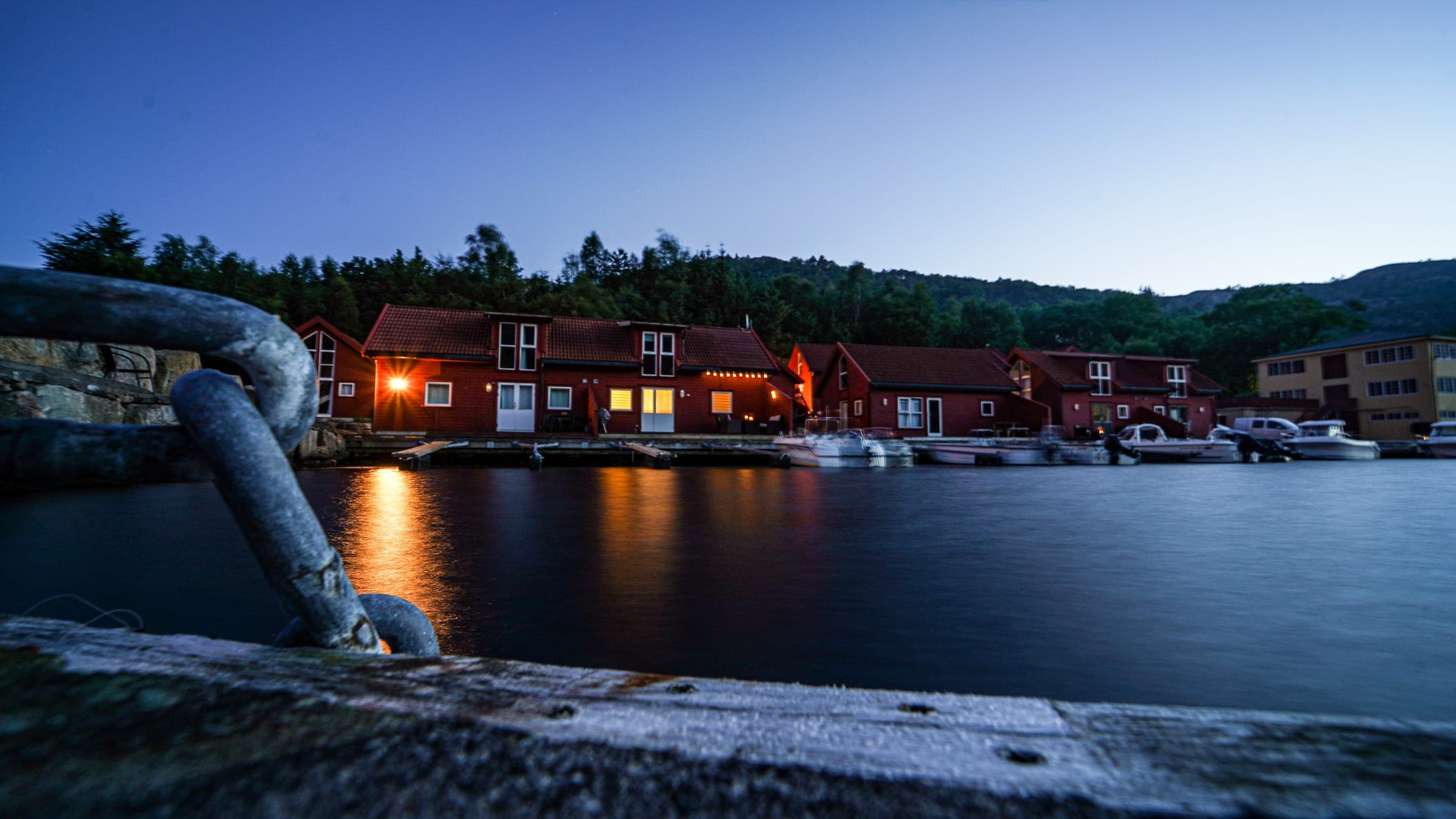
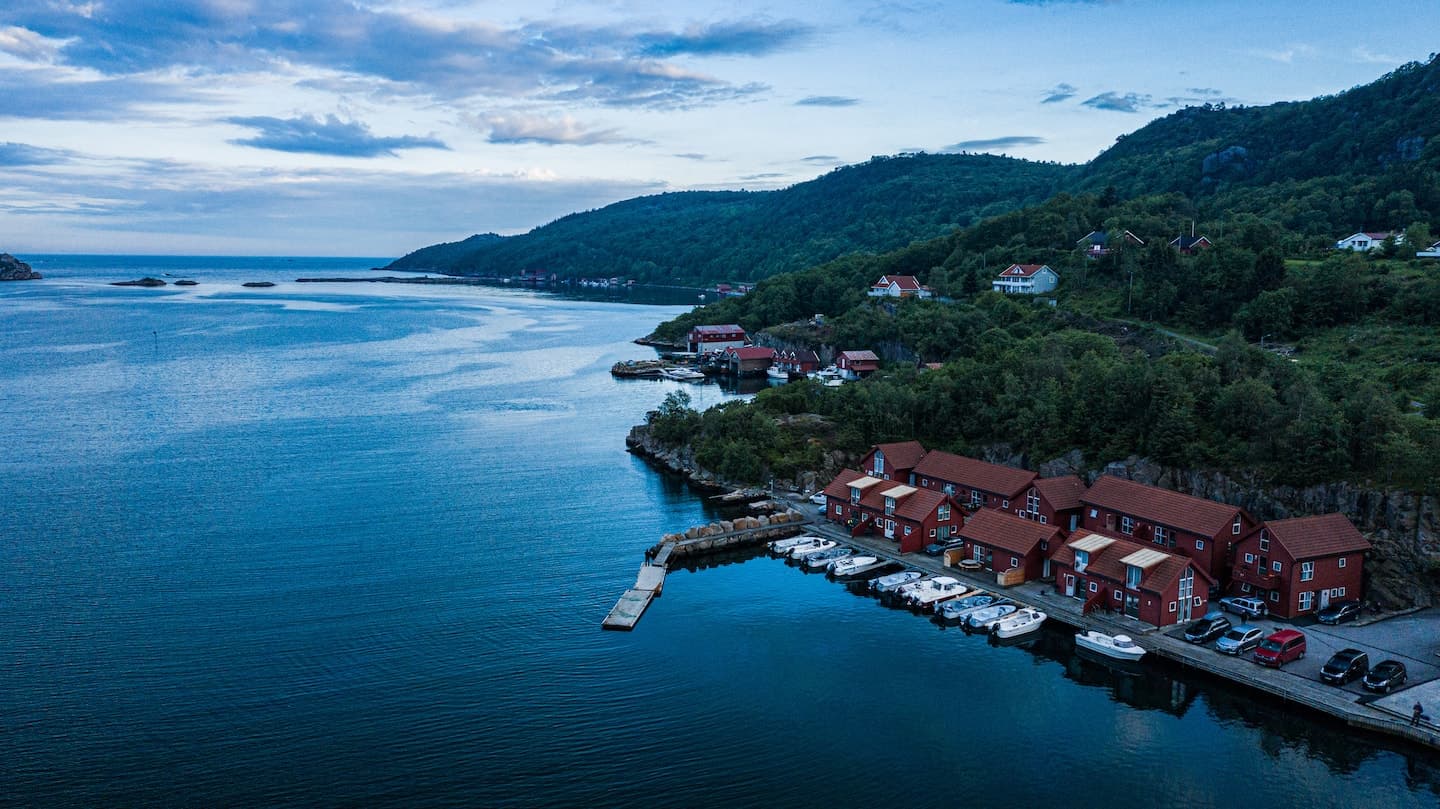
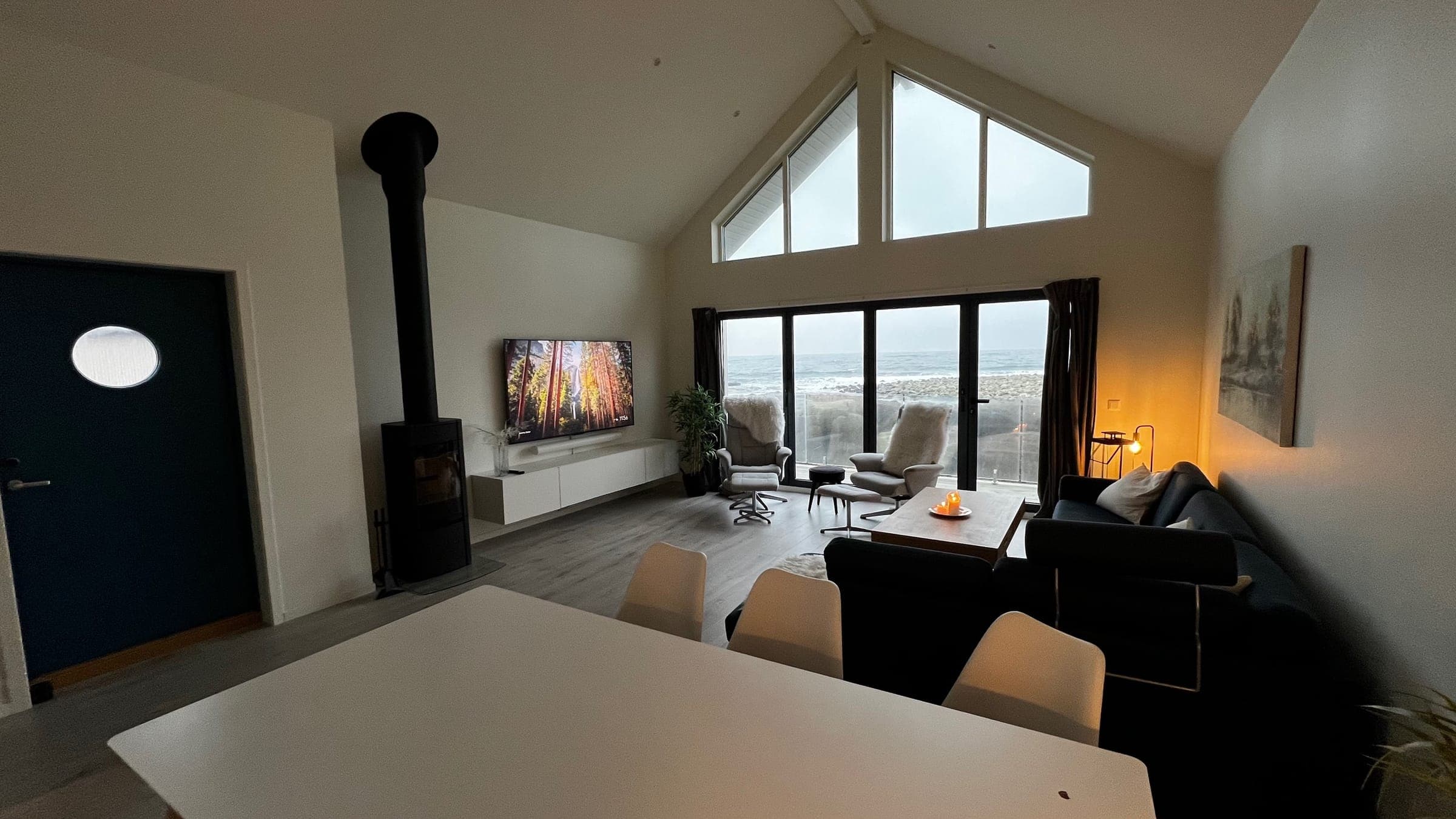
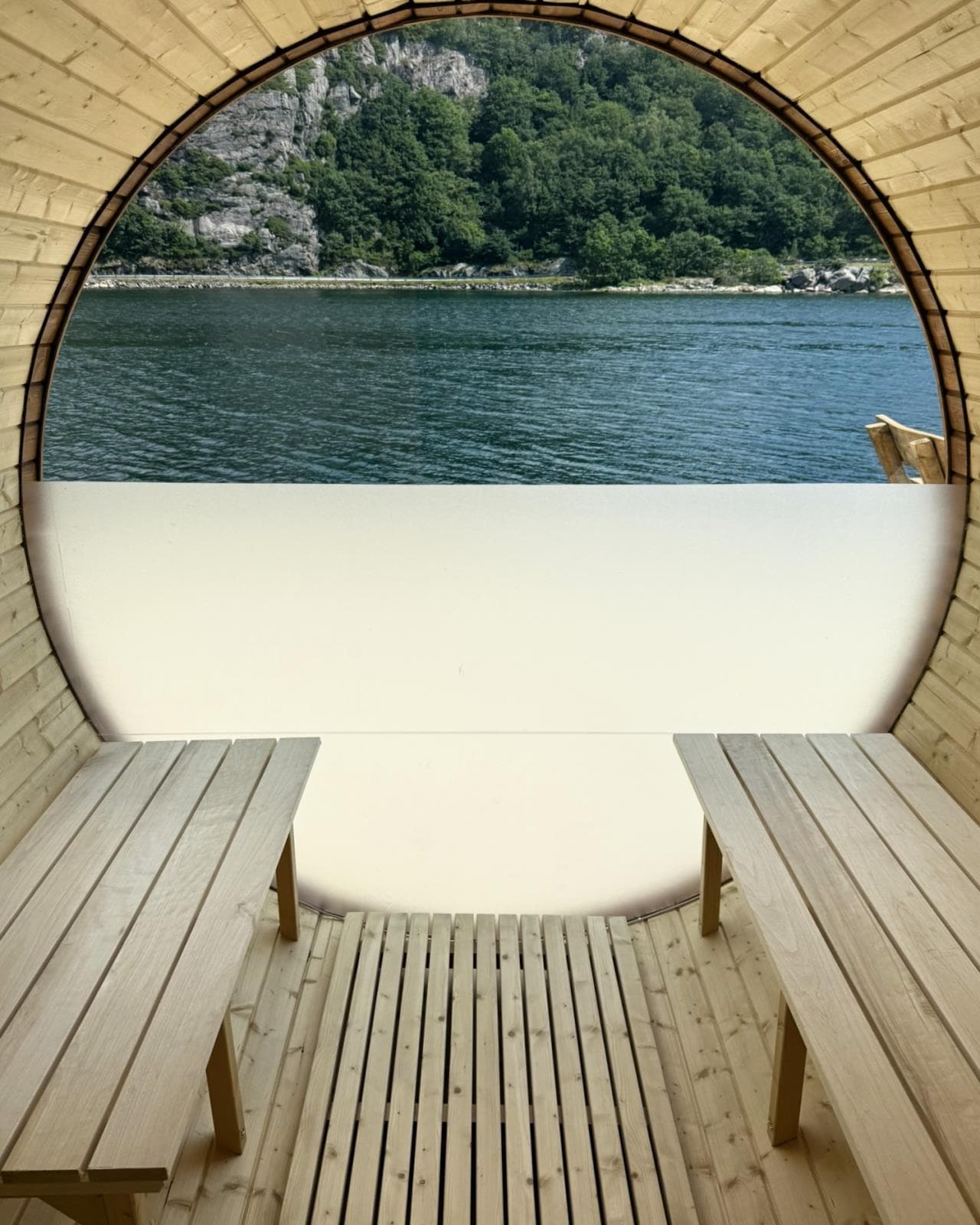
Our two houses at Ramsland near Spangereid are right on the water. Ramsland 8a offers around 100 square metres for up to eight guests from 110 euros per night, along with a new panorama sauna with fjord view, shared with the neighbouring houses on the site. Ramsland 2d is the compact counterpart at roughly 62 square metres, up to six guests from 80 euros per night, with a new barrel sauna, also facing the fjord and also shared. Both houses have their own dock and a motorboat included in the rent, available from 22 March to 8 November.
Maritim 2 at Borhaug on Lista has no sauna, but it does have a wood stove in the open living area and panorama windows with the sea behind them. Five bedrooms, up to nine guests, from 150 euros per night. Dogs are welcome in all three houses.
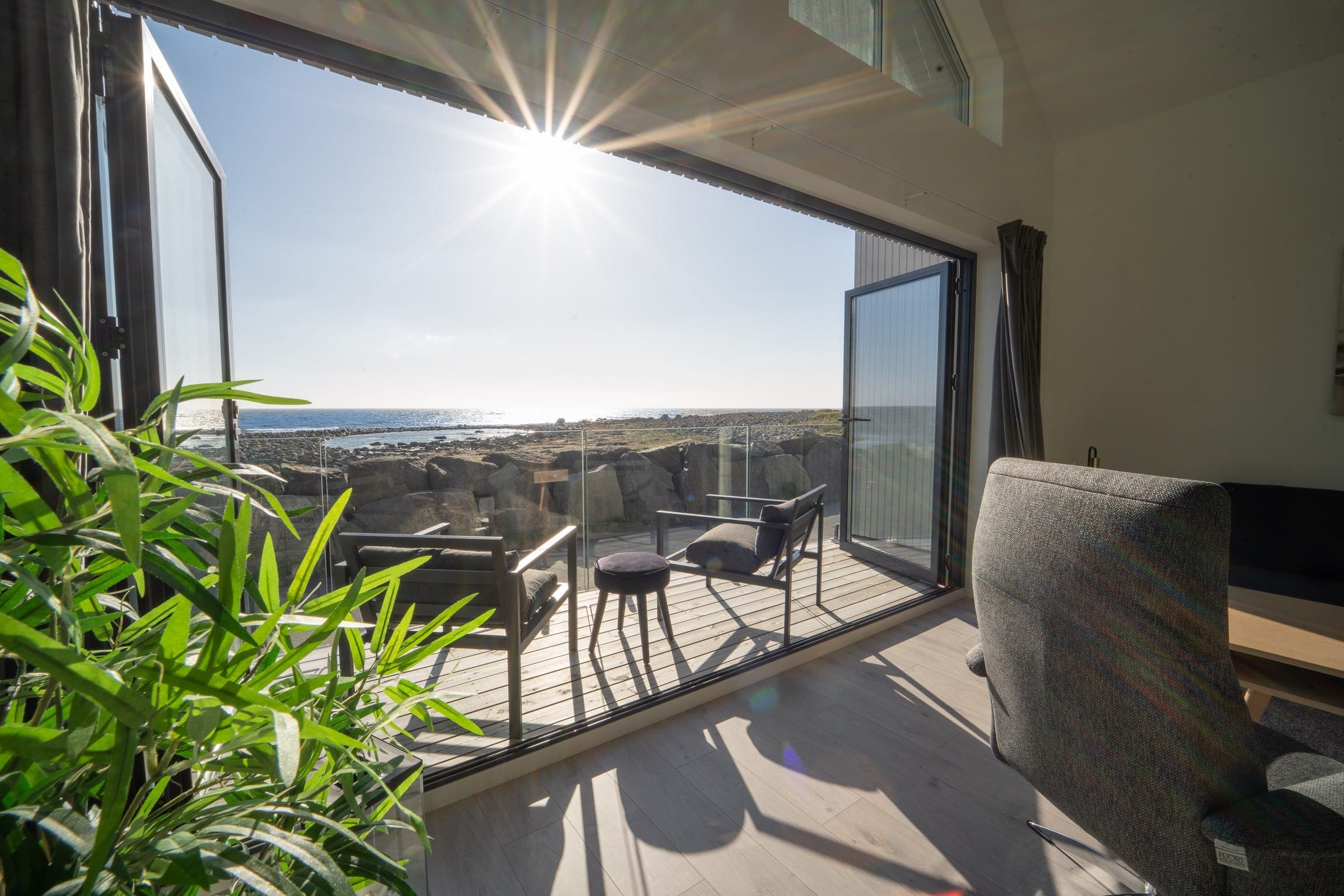
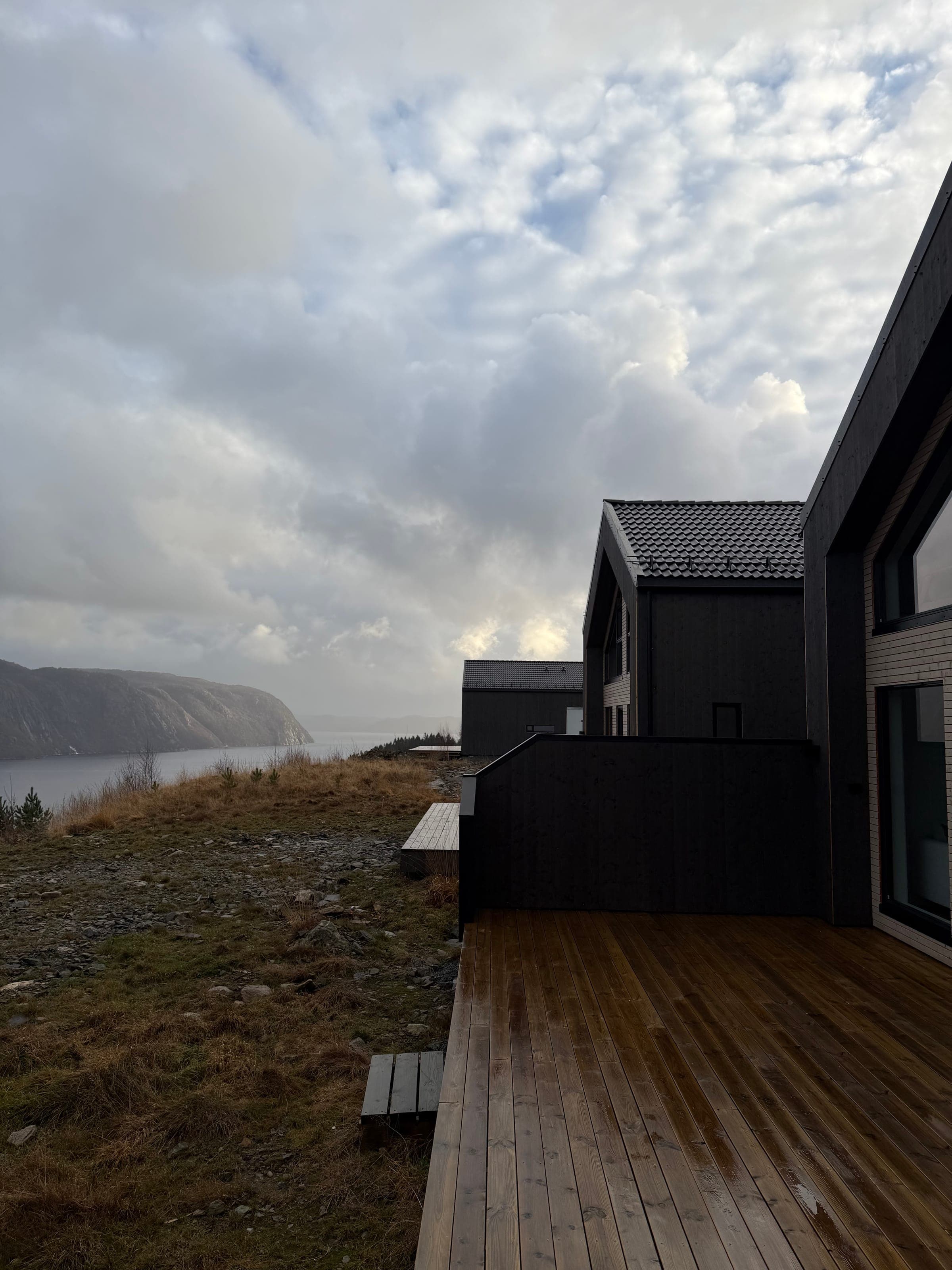
And then there is Odrelia, our new build near Farsund. It will be the only one of our houses with a private sauna, built directly onto the building, with a large panorama window facing the fjord. No shared facility, just you and the view. Odrelia will be bookable from spring 2027: 115 square metres, three bedrooms, up to six guests. If you want to hear first, you can add yourself to the waiting list on the Odrelia page, with no obligation.
Frequently asked questions
Badstue is the Norwegian word for sauna. Originally it means a one-room building, usually built of logs and put up purely for sauna bathing. Badstuer have been known in Norway since the time of St Olav, in other words since the beginning of the 1000s. Most badstuer today are modern constructions found in public baths, hotels, private homes and cabins.
The temperature in the sauna room is usually held between 55 and 70 degrees, but it can go considerably higher, past 100. The air is dry to start with. Only when water is thrown on the hot stones of the stove do you get intermittent steam and a brief rise in humidity. That is why the same number of degrees can feel very different in two saunas.
Yes. Our houses Ramsland 8a for up to eight guests from 110 euros per night and Ramsland 2d for up to six guests from 80 euros per night sit right on the water in Spangereid. Ramsland 8a has a panorama sauna, Ramsland 2d a barrel sauna, both with a fjord view and both shared with the neighbouring houses. From spring 2027, Odrelia joins them with a private panorama sauna.
On the south coast the fjords generally stay free of ice thanks to the Gulf Stream, so bathing is possible year-round. Visit Norway advises beginners to simply keep bathing through autumn so the transition happens gradually. A hat, gloves and socks help, your head does not need to go under, and a dock ladder makes getting out easier. Never bathe alone, and keep something hot to drink ready.
Living by the water