Off-season on the Sørlandet
Southern Norway in autumn and winter: the quiet side of the coast.
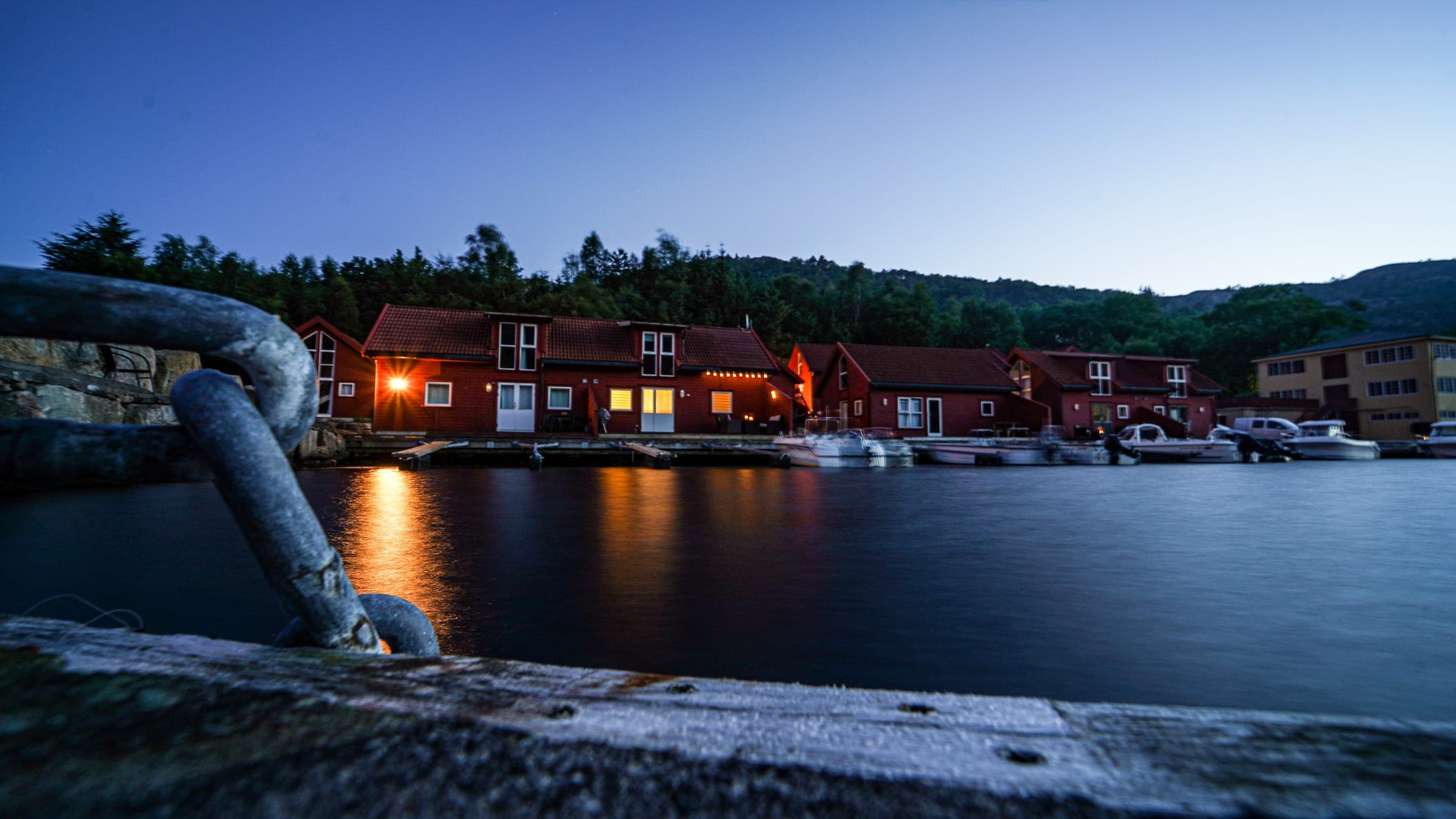
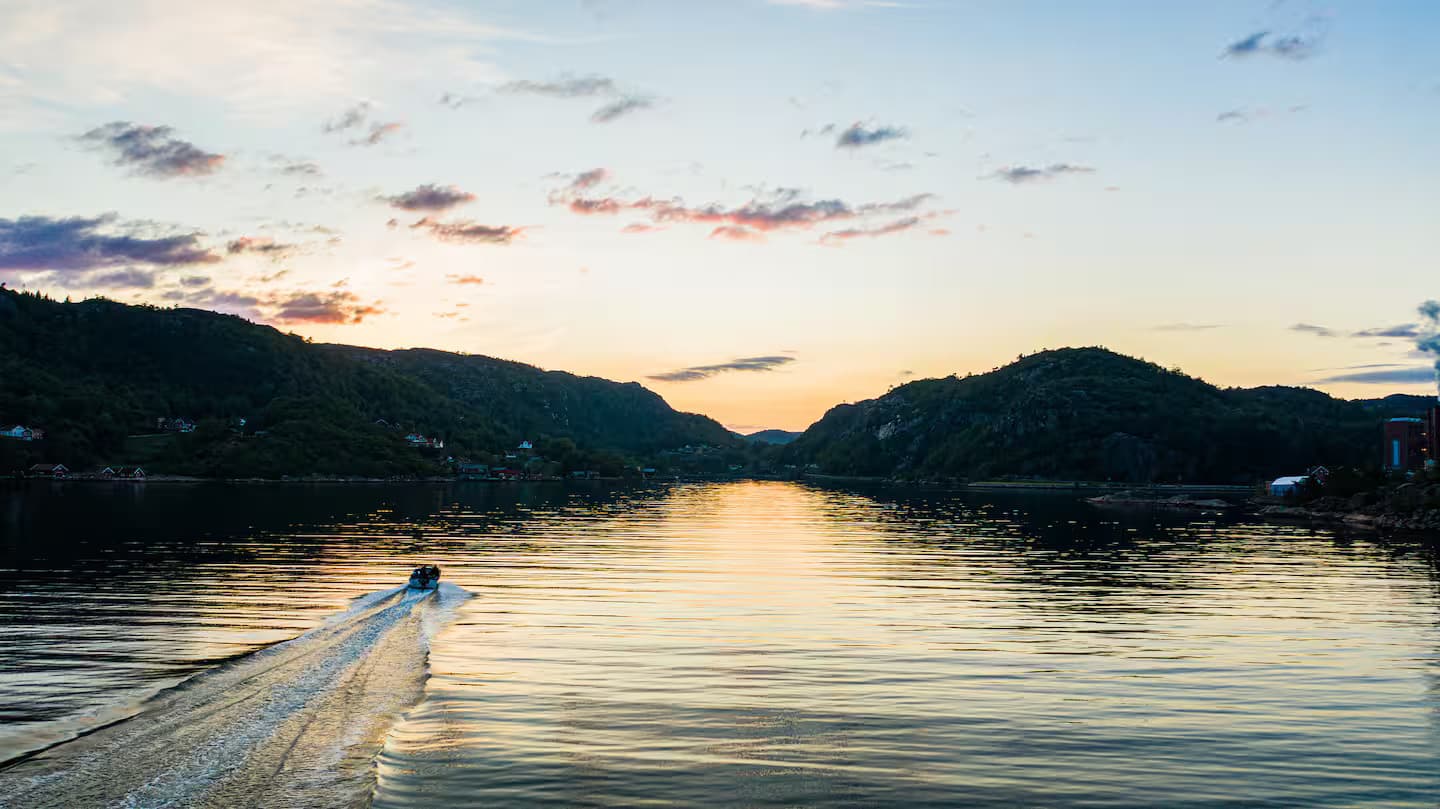
Most people think of Norway in summer: bright nights, boats, beaches. But if you only know the Sørlandet in July, you're missing half of it. In September the coast empties, the colours soften, the evenings grow shorter and cooler. That is when you see what truly holds this place together: the silence, the light over the water, a fireplace doing its job in the evening.
Southern Norway's coast, thanks to the North Atlantic Current, is ice-free year-round and milder than most people expect. Even in January, daytime highs sit at around 3 to 4 degrees, and readings below minus ten are rare on the coast. The Encyclopaedia Britannica describes the coastal areas east of Lindesnes as having the warmest climate in the country. Our homes stand right there.
Milder than you think
The climate on the Sørlandet coast surprises. The 1991 to 2020 normal period shows average September highs in Kristiansand of around 16 to 17 degrees, October around 11, November around 6. In the depth of winter, January and February, daytime highs sit at roughly 3 to 4 degrees, nights between minus 3 and plus 1. Right on the coast near Farsund the swings are even smaller: the sea acts as a buffer, and the gap between day and night narrows.
That the entire Norwegian coast stays ice-free year-round is down to the North Atlantic Current, the European branch of the Gulf Stream. It keeps sea-surface temperatures well above what you would expect at this latitude in Alaska or Greenland. In Norwegian the region is known as "det blide Sørlandet": the smiling Sørlandet. Visit Norway promotes it as having more hours of sunshine per year than most other parts of the country.
What the silence changes
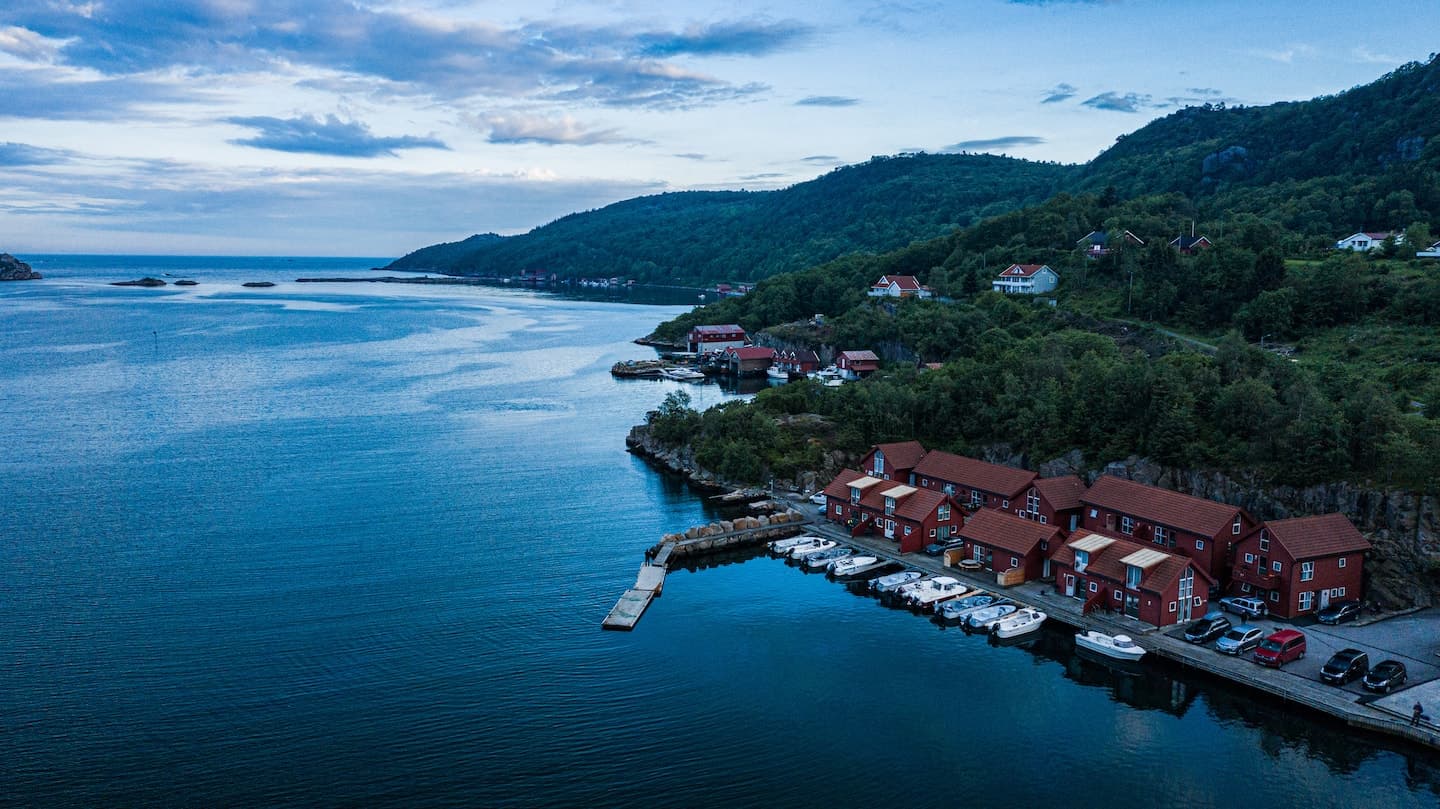
In July you share the coast with holidaymakers, sailors, campers. In October it is yours. The Kyststien on Lista, roughly 30 kilometres of coastal path, is walkable in autumn and empty. Lindesnes lighthouse, which draws over a hundred thousand visitors a year in summer, stands almost alone in the rocky landscape on a November day. The beaches that are family meeting points in summer become wide, empty expanses.
For birdwatchers, autumn is in fact the best time. Migration starts for some species as early as the beginning of July and runs until late November. At the bird observatory by the Lista lighthouse, 260 to 290 species are observed in a typical year. The most exciting months fall precisely in the off-season.
Sauna, fireplace and the view of the water
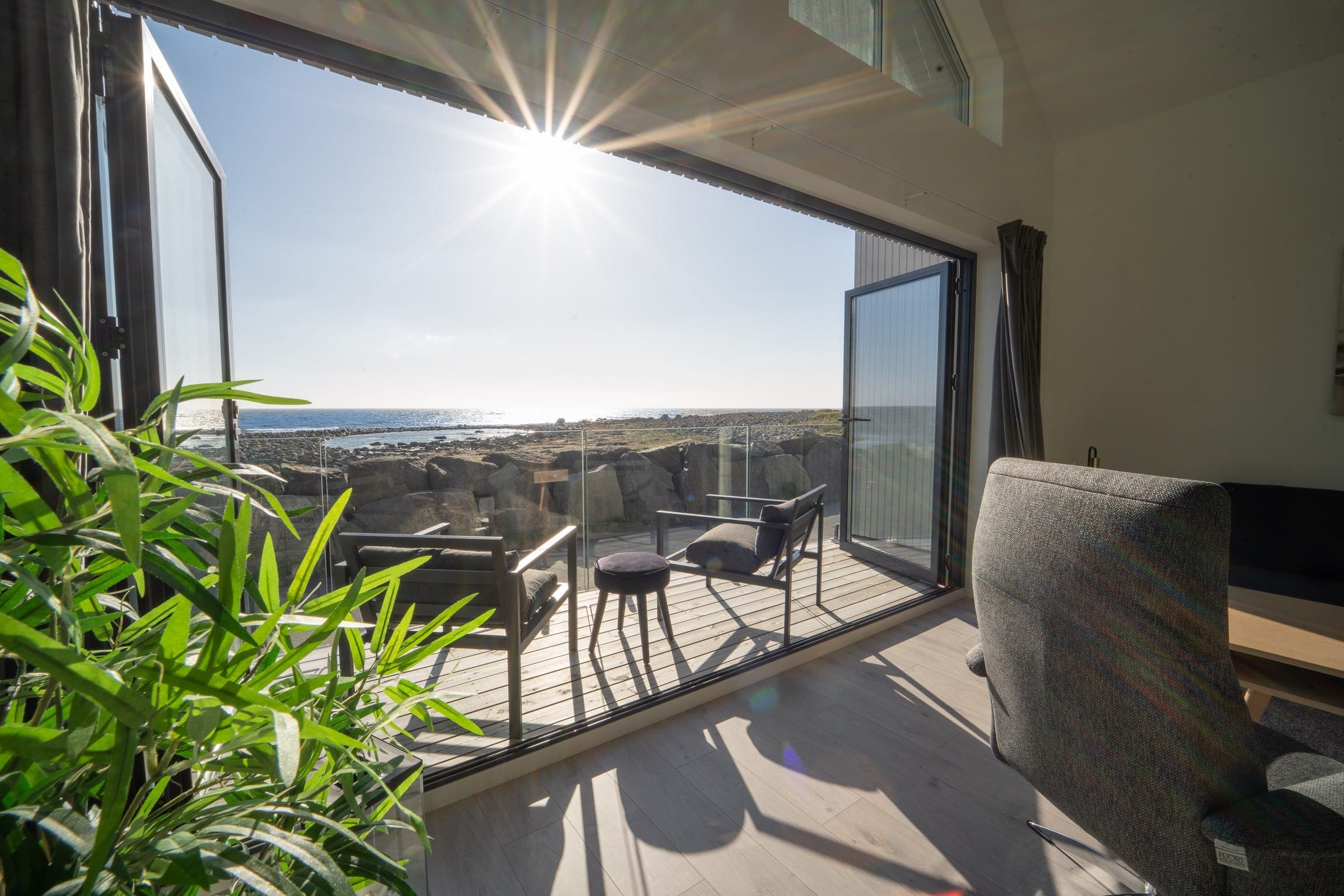
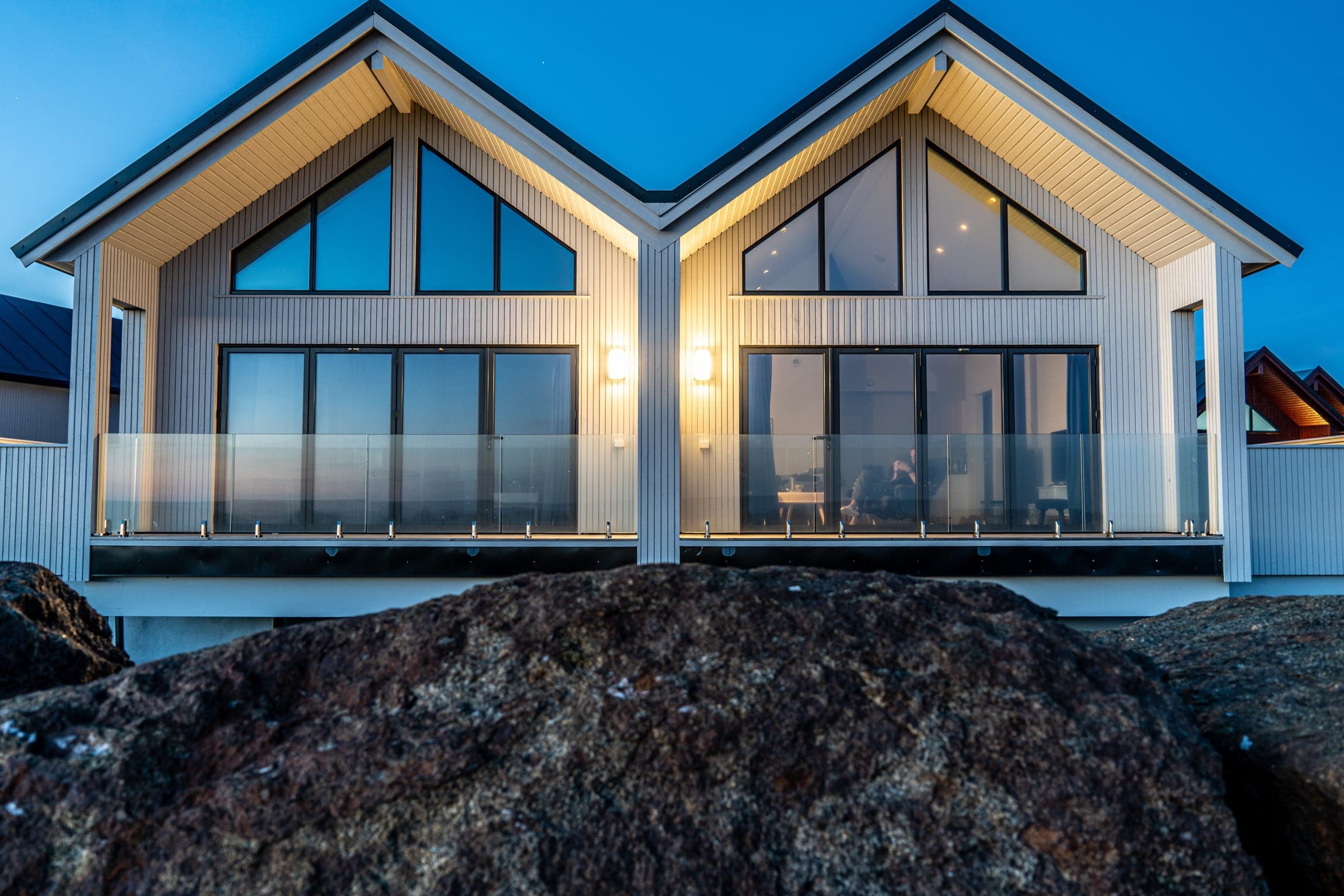
What waits after a day in cold sea air is what makes the difference. Maritim 2 in Borhaug has an open living area with a fireplace and floor-to-ceiling panorama windows. Underfloor heating throughout. Outside the sky turns grey, inside the fire crackles. Ramsland 8a in Spangereid has a panorama sauna with a view of the fjord, and Ramsland 2d a barrel sauna, also looking out over the water. Heat up, look out, settle down.
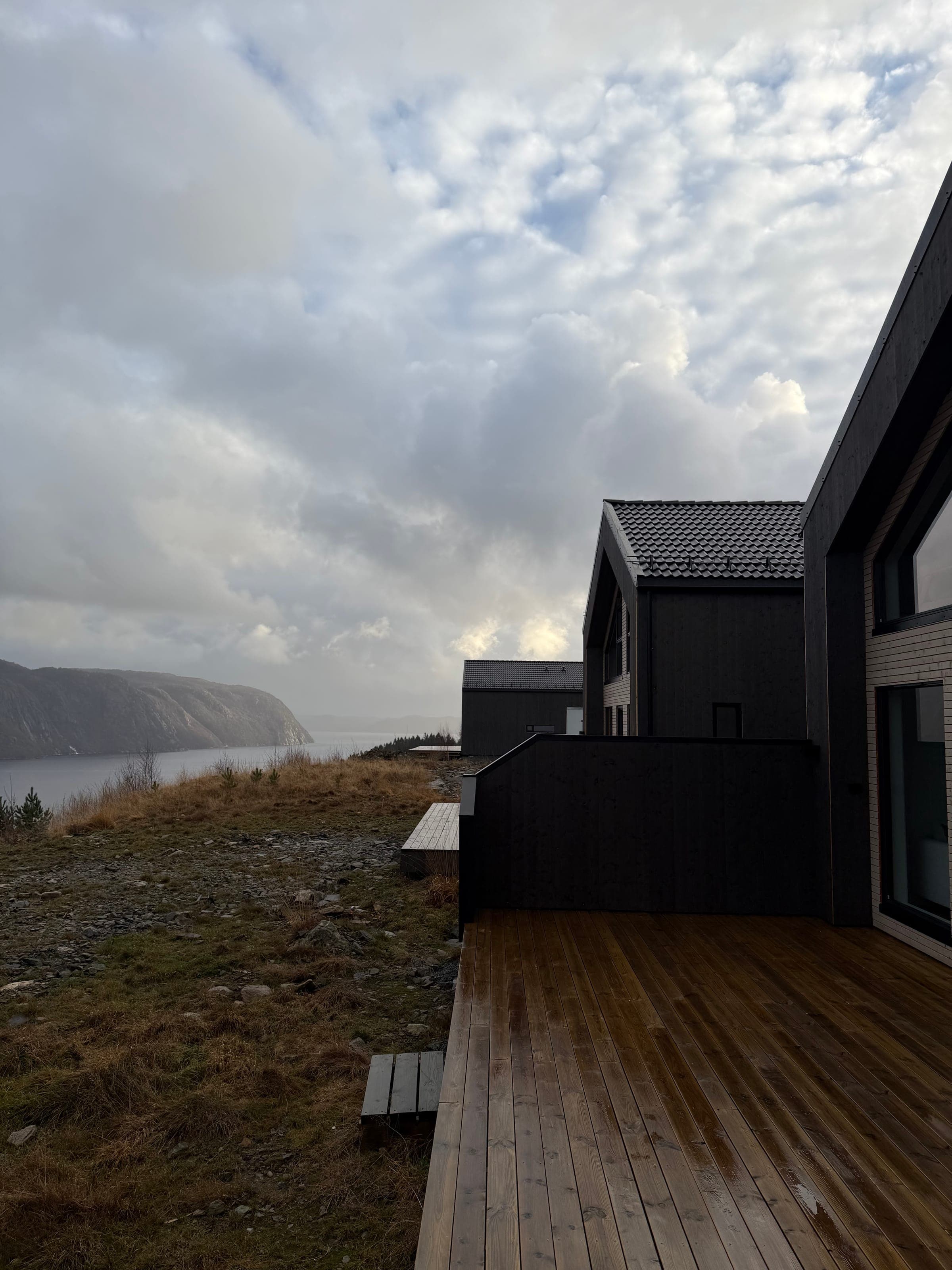
From spring 2027, a fourth house joins the lineup. Odrelia in Farsund will be the first FJORD HOMES home bookable year-round: a private panorama sauna built onto the house, a wood-burning stove, fjord views. In summer and in the depth of winter. Those who want to be first to know can join the waiting list.
What awaits outside
The coast does not disappear in autumn. The Kyststien on the Lista peninsula is walkable all year, with most sections flat and manageable even in wet weather. The Fjellstien at Lindesnes lighthouse, a circular trail of roughly 4 kilometres, offers views over the open sea on clear winter days that would vanish in the summer haze.
Snow on the coast comes and goes. When it stays, it turns the rocks and beaches into a landscape that exists for a day or two and then is gone. If you want snow more reliably: the ski areas Sirdal and Hovden are roughly two hours away by car. And the restaurant Under near Lindesnes, Europe's first underwater restaurant by the architects Snøhetta, is open in the off-season too.
A holiday home in the off-season
The three bookable homes start at 80 euros per night (Ramsland 2d), with Ramsland 8a from 110 euros and Maritim 2 from 150 euros. In spring and autumn, availability is at its best, prices are lower than in high summer, and the landscape is almost yours alone. Dogs are welcome in all three homes.
The motorboats are ready from 22 March to 8 November. Outside that period they are in winter storage, but the houses themselves are heated, with fast internet and fully equipped kitchens made for longer stays too. Odrelia will become the first home built explicitly for year-round use from spring 2027. Booked directly with us, without platform fees, with personal local contacts.
Frequently asked questions
In the long-term average, January and February daytime highs in Kristiansand sit at around 3 to 4 degrees, with nights between minus 3 and plus 1. Temperatures below minus ten are rare on the coast. Thanks to the North Atlantic Current, the entire Norwegian coast stays ice-free year-round.
Yes. The Kyststien on Lista (roughly 30 kilometres) is walkable year-round, with most sections flat. The Fjellstien at Lindesnes lighthouse offers wide views over the open sea on clear days. Sturdy footwear and a rain jacket are recommended. In autumn you often have the trails entirely to yourself.
All homes are heated. Maritim 2 also has a fireplace in the living area and underfloor heating throughout. Ramsland 8a offers a panorama sauna with fjord view, and Ramsland 2d a barrel sauna. From spring 2027, Odrelia joins with a private panorama sauna and a wood-burning stove.
November is one of the most exciting months for birdwatchers at Lista, daytime highs sit around 6 degrees, and the coast is almost deserted. The houses are heated and cosy, availability is good, and prices are lower than in summer. If you are looking for silence and do not mind short days, this is when you find the most honest Sørlandet.
Living by the water